Security assessment for a small business
A sample assessment of a demo business application and managed devices. It shows how CoreD would turn control gaps into a prioritized fix list with owners and verification checks.
Problem & Transformation
How the sample moves from control gaps to a report and fix plan.
The team needed to know what to fix first
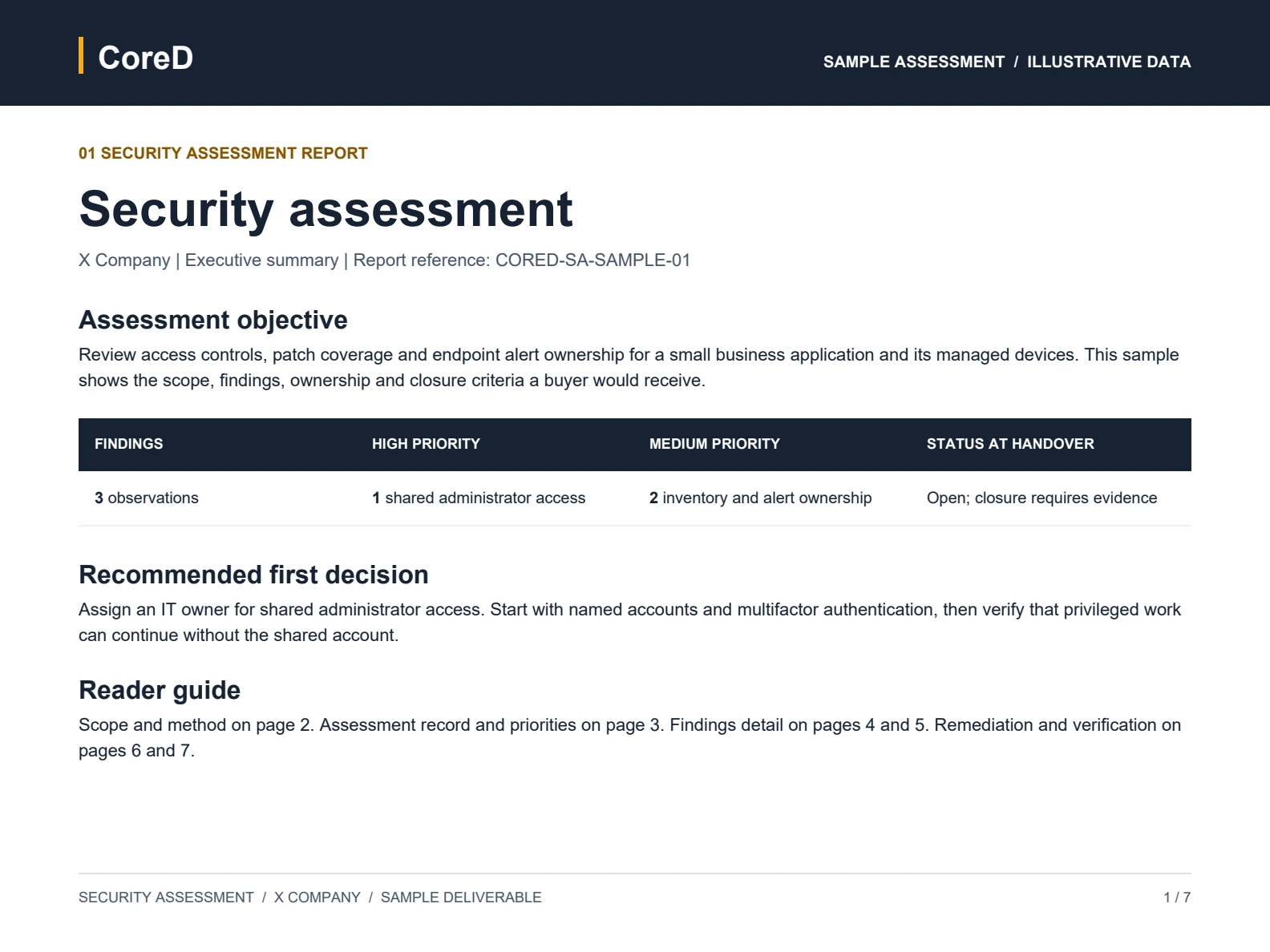
X Company relies on one business application and a small set of managed devices. In this example, the team has shared administrator access, a gap in its patch inventory and no named owner for endpoint alerts.
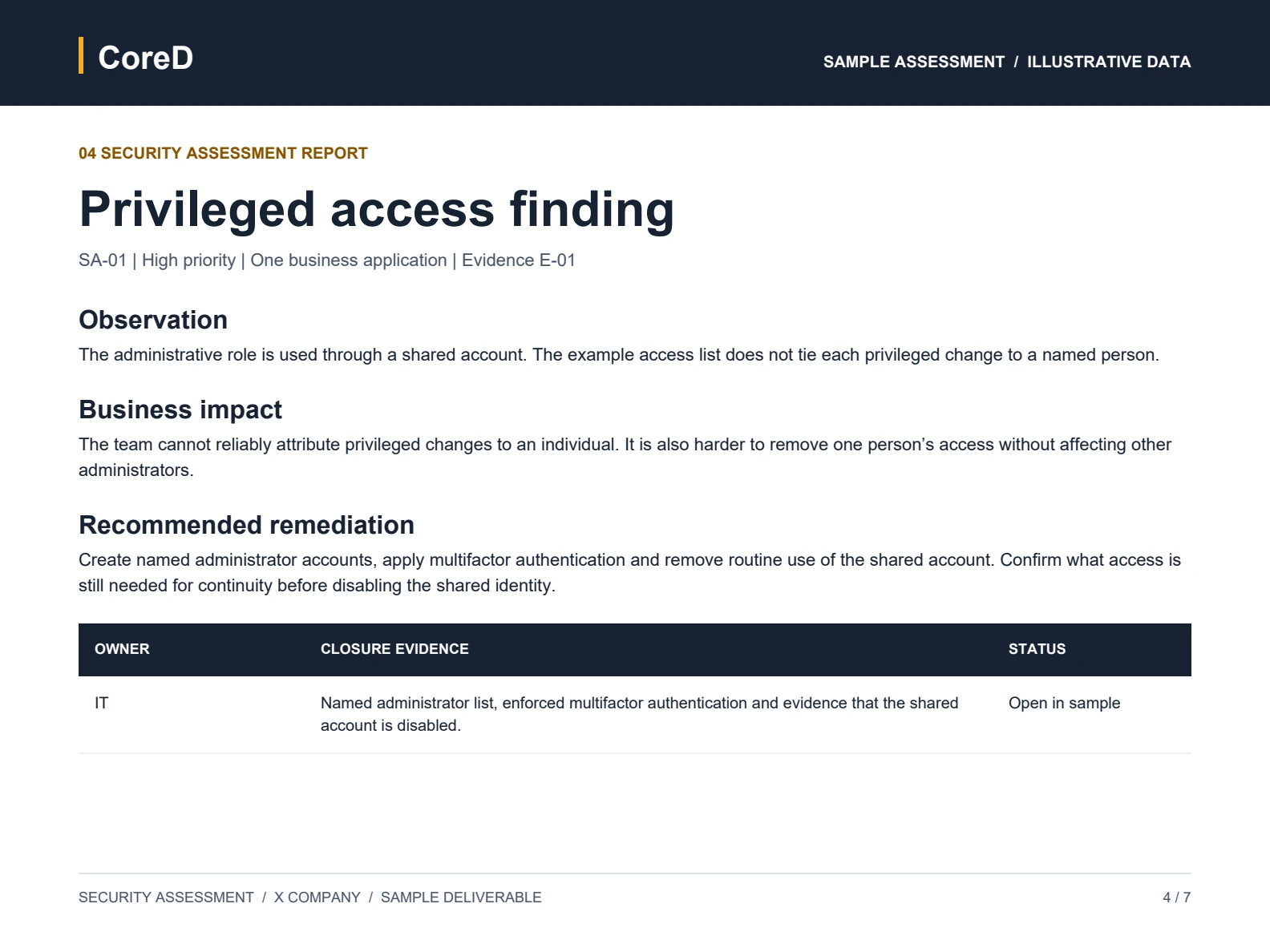
- Shared admin access makes changes harder to attribute.
- One demo device is missing from the patch inventory.
- The team has no owner for reviewing endpoint alerts.
Review the controls and give every fix an owner
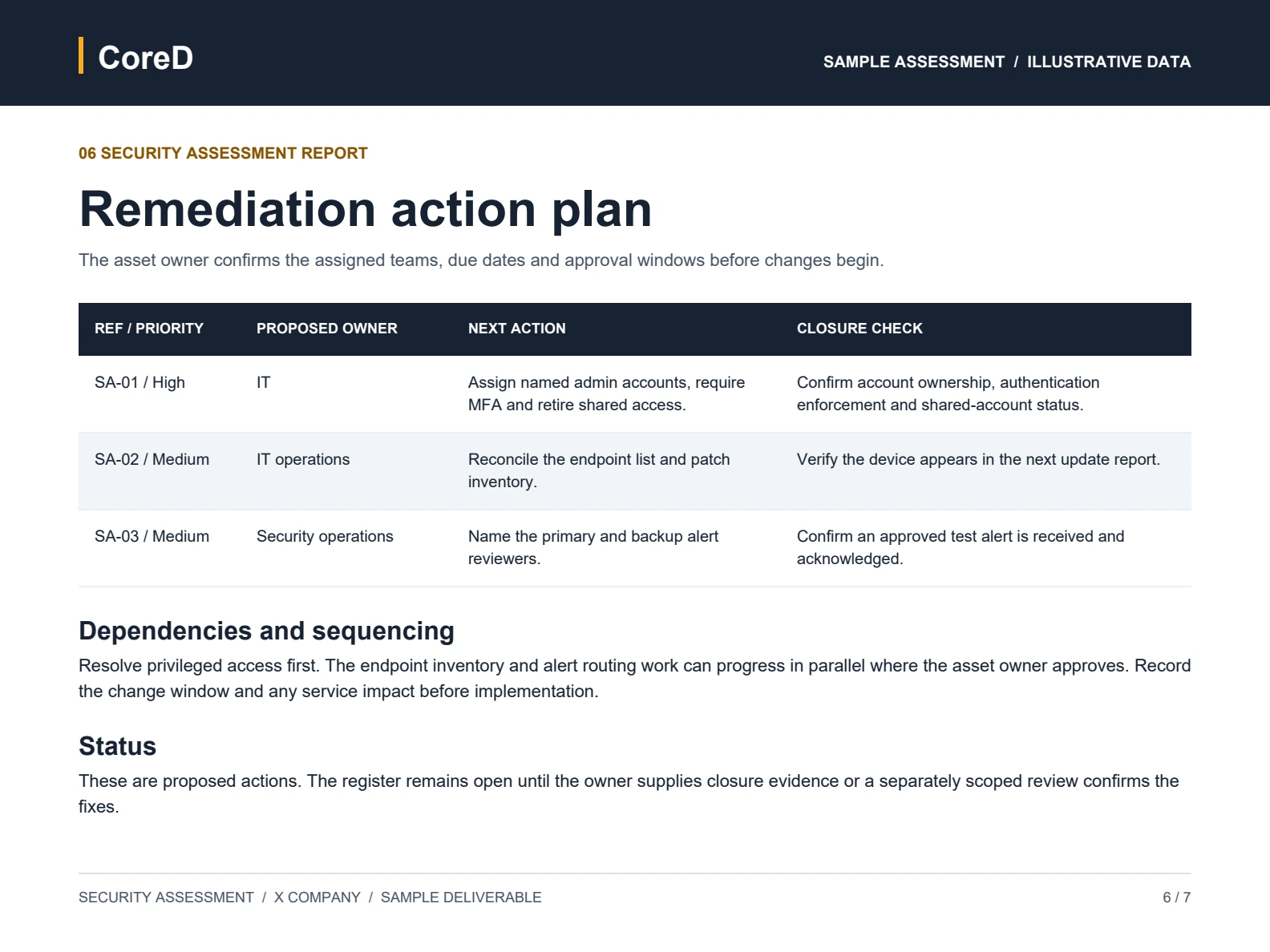
The sample starts with an approved asset list and exclusions. The report records each observation, its business impact and the person who would own the fix. Each recommendation includes a check the owner can use before marking the item closed.
- Record the business impact and assign a priority.
- Assign each action to IT, IT operations or security operations.
- Agree how to verify fixes and scope any follow-up separately.
Project timeline
The three phases show how a scoped assessment would run.
- 1.Agree on scope and authorization
- 2.Review controls and prioritize findings
- 3.Hand over actions and agree verification
Key Capabilities
Scope and exclusions
List the application and managed devices in scope, with written authorization before any real review.
Control review
Check privileged access, patch inventory and endpoint alert ownership.
Findings register
Record the observed gap, business impact and priority for each finding.
Remediation handover
Give every proposed fix an owner and a clear check for closure.
Results & Impact
Sample findings are shown as open. Each has a proposed owner and a closure check.